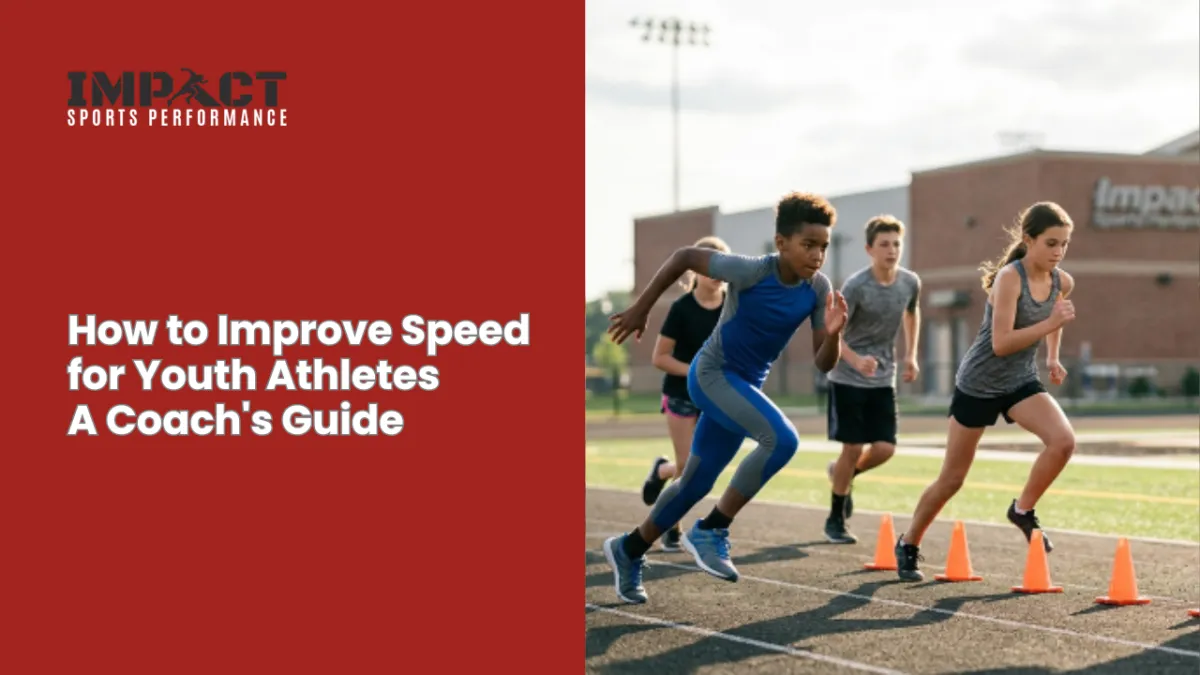
How to Improve Speed for Youth Athletes | Impact Sports Performance
Speed is one of the most coveted athletic qualities, and one of the most misunderstood. The good news? Speed is trainable. With the right methods, young athletes can make significant improvements in their acceleration, top-end speed, and agility, regardless of their sport.
At Impact Sports Performance in Novi, MI, our coaches work with youth athletes every day using evidence-based, science-backed speed training programs. Here's what every coach and parent should know about developing speed in young athletes.
Cornerstone Content Note
This is a cornerstone blog post. Internal links from related posts (speed drills, agility, combine prep) should point back to this article.
Why Speed Training for Youth Athletes Is Different
Young athletes are not mini adults. Their nervous systems, muscle fiber composition, and movement patterns are still developing, which means speed training must be age-appropriate and progression-based.
The most critical window for speed development is roughly ages 8–16, often called the
"speed-sensitive period." During this time, athletes respond exceptionally well to sprint mechanics training, plyometrics, and neuromuscular coordination work. Missing this window doesn't eliminate the opportunity to improve, but capitalizing on it accelerates long-term athletic development.
Common mistakes coaches and parents make include:
Overemphasizing strength at the expense of mechanics
Running athletes without teaching proper technique
Skipping the warm-up and activation work that primes the nervous system
Not allowing enough recovery between speed sessions
The 4 Pillars of Youth Speed Development
1. Sprint Mechanics & Running Technique
Before pushing speed, athletes need to learn how to run correctly. Poor mechanics create a ceiling on speed and increase injury risk. Key mechanical checkpoints include:
High knee drive and forward lean during acceleration
Powerful arm swing from hip to chin (not crossing the midline)
Triple extension: ankle, knee, and hip fully extending at push-off
Relaxed shoulders and a neutral head position
Technique work should be a staple in every session, not just for beginners.
2. Acceleration Training
Most youth sports involve explosive short bursts, 5 to 30 yards, rather than sustained sprinting. This makes acceleration training especially important. Effective drills include:
Resisted sprints (sled pushes, resistance bands)
Wall drills for drive-phase mechanics
Falling starts and partner-resisted starts
Short acceleration sprints (10–20 yards) with full recovery
3. Plyometrics & Explosive Power
Speed is generated by how much force an athlete can apply to the ground, and how quickly. Plyometric training teaches the body to store and release elastic energy, which directly translates to faster sprint times.
Age-appropriate plyometric progressions include:
Broad jumps and box jumps (beginner)
Bounding and hurdle hops (intermediate)
Depth drops and reactive jumps (advanced)
Important: Plyometric volume should be carefully managed. Younger athletes need lower volumes with longer rest intervals.
4. Strength Training as a Speed Foundation
Strength training doesn't make athletes slower — it makes them faster. Stronger muscles produce more force, and more force equals faster acceleration. For youth athletes, the emphasis should be on:
Hip-dominant movements (deadlifts, hip thrusts)
Single-leg strength (lunges, step-ups)
Core stability and anti-rotation work
Want to explore our structured strength and speed programs? Check out our Youth Sports Performance Program and our Advanced Sports Performance Training in Novi, MI.
Sample Youth Speed Drill Sequence
Here is a coach-approved drill sequence that can be incorporated into any practice or training session. This is structured for athletes ages 10–16.
Athletes preparing for recruiting events or combines can take their speed training to the next level with our Combine Prep Training Program, purpose-built to maximize measurable performance.
Ready to Build Real Speed? Start with an Evaluation.
Schedule Your Free Athlete Evaluation at Impact Sports Performance
How Often Should Youth Athletes Train Speed?
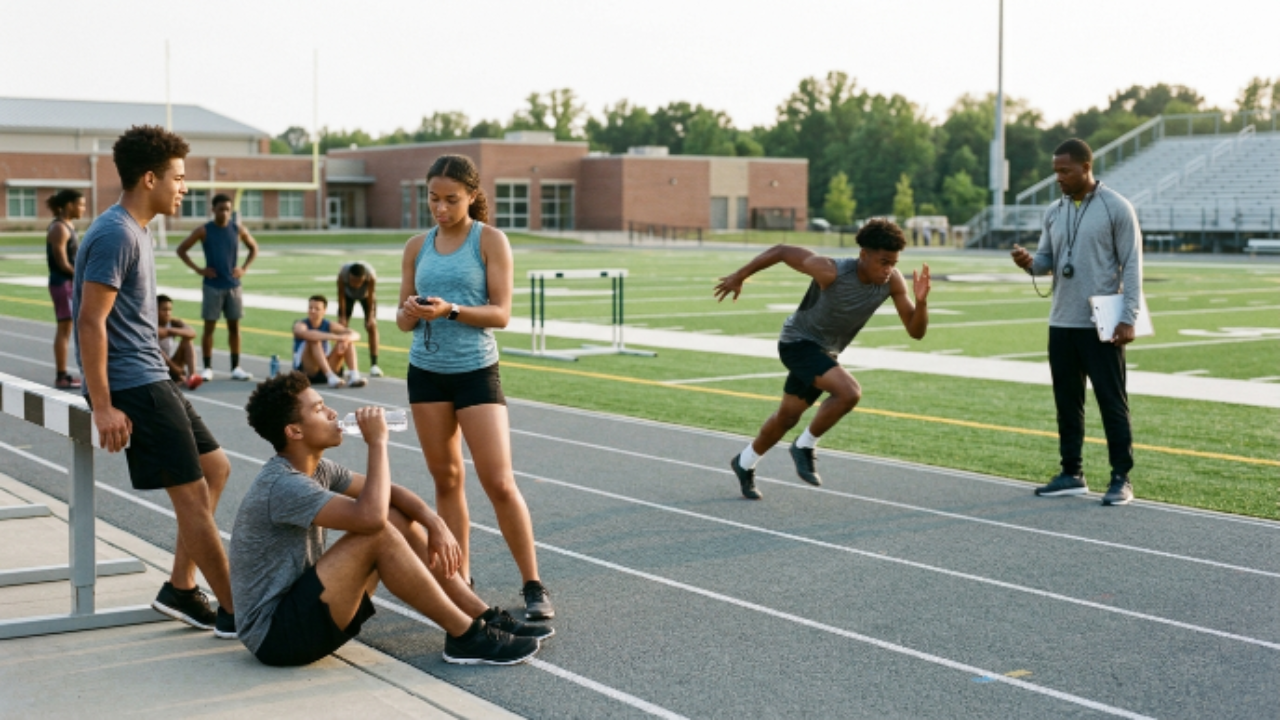
Speed is a neural quality, which means it responds best to high-intensity, low-fatigue sessions. Trying to train speed while tired is counterproductive and increases injury risk.
General programming guidelines:
2–3 dedicated speed sessions per week during off-season
1–2 maintenance sessions during in-season (coordinated with practice schedule)
Full recovery (3–5 minutes) between maximum-effort sprints
Speed work should be done early in the session, before fatigue sets in
Our coaches at Impact develop periodized programs for athletes at our Novi, Brighton, and East Lansing locations that sequence speed, strength, and recovery appropriately throughout the year.
Middle School Athletes
Speed development is especially impactful during middle school years. Our Middle School Sports Performance Program is specifically designed to build the athletic foundation young athletes need. Learn more at impact-sportsperformance.com/middle-school-program
Common Speed Training Myths, Debunked
Myth #1: “Speed is genetic, you either have it or you don’t.”
False. While genetics play a role in maximum speed potential, every athlete has significant room for improvement with proper training. We see measurable speed gains in virtually every athlete we work with.
Myth #2: “More sprinting = more speed.”
Quantity without quality backfires. Sprinting with poor mechanics just reinforces bad habits. Deliberate, coached speed work always outperforms random sprint volume.
Myth #3: “Youth athletes shouldn’t lift weights.”
Research consistently shows that supervised strength training is safe and beneficial for youth athletes, and is one of the best ways to improve speed, power, and injury resilience.
Frequently Asked Questions
Q: At what age should youth athletes start speed training?
A: General athletic movement and coordination can begin as early as age 6–7. Structured speed training with sprint mechanics and plyometrics is most appropriate starting around age 8–10, with programming scaled to the athlete's development level.
Q: How long does it take to see speed improvements in youth athletes?
A: Most athletes see measurable improvements within 6–10 weeks of consistent, quality speed training. The rate of improvement depends on training frequency, mechanics quality, and the athlete's developmental stage.
Q: Is speed training at Impact Sports Performance sport-specific?
A: Yes. While the foundational speed mechanics apply across all sports, our coaches program drills and movements that match the demands of each athlete's primary sport — from football and soccer to basketball, baseball, and track.
Q: Do you offer speed training near me in Novi, MI?
A: Yes! Our flagship location is at 41550 Grand River Ave, Novi, MI 48375 (inside TOCA Training Center). We also have locations in Brighton and East Lansing. Call 248-907-4520 or visit impact-sportsperformance.com to schedule an evaluation.
Q: What's the difference between speed training for middle school vs. high school athletes?
A: Middle school athletes benefit most from movement quality and coordination work. High school athletes can handle greater intensity, more complex plyometrics, and heavier strength loads. Our coaches tailor each program to the athlete's age and ability.
Ready to Make Your Athlete Faster?
Speed training isn't a one-size-fits-all formula, it requires expert coaching, individualized programming, and consistent effort. At Impact Sports Performance, every athlete starts with a comprehensive evaluation so we can build the exact program your athlete needs to reach their potential.
We serve youth athletes across Novi, Brighton, and East Lansing, Michigan. Whether your athlete is just starting out or preparing for a high-level combine, our coaches are ready to help. Explore our programs page or meet our coaching staff to learn more.
Start with a Free Athlete Evaluation, No Commitment Required.