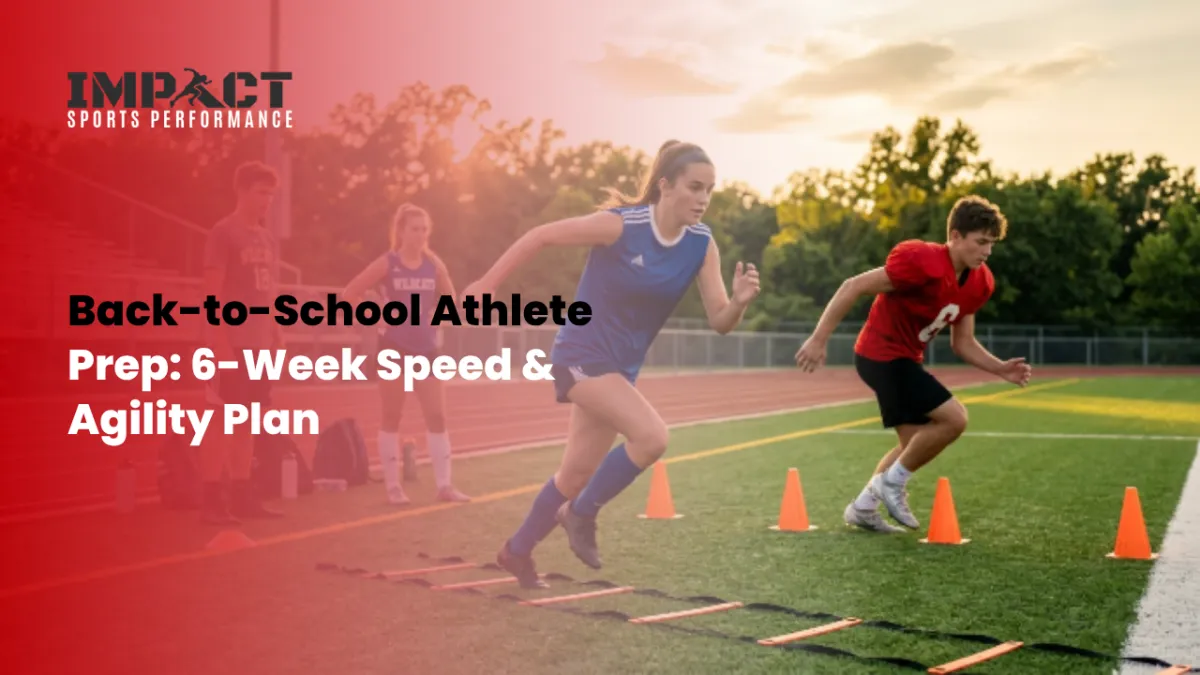
Back-to-School Athlete Prep: 6-Week Speed & Agility Plan for Student Athletes
As summer winds down and the new school year approaches, student-athletes have a valuable opportunity to gain a competitive edge before tryouts, practices, and games begin. Whether your child plays football, soccer, basketball, volleyball, lacrosse, baseball, softball, or another sport, speed and agility are critical performance factors that can separate good athletes from great ones.
The weeks leading up to the school year are ideal for focused athletic development. With fewer academic demands and greater scheduling flexibility, athletes can dedicate time to improving acceleration, change of direction, reaction time, balance, coordination, and overall athleticism.
This 6-week speed and agility plan is designed to help athletes build a strong foundation, improve movement efficiency, and enter the season confident and prepared for competition.
Help Your Athlete Start the School Year Strong
Why Speed and Agility Training Matters
Many athletes assume that simply playing their sport is enough to improve performance. While practice is important, sport-specific activities alone often fail to develop the movement mechanics needed for elite athletic performance.
Speed and agility training helps athletes:
Improve first-step explosiveness
Accelerate faster
Change direction efficiently
Enhance body control
Improve reaction time
Reduce injury risk
Build confidence during competition
Athletes who train speed and agility consistently often perform better in game situations because they can react more quickly and move more efficiently than their competitors.
The Structure of This 6-Week Program
This training plan follows a progressive approach:
Weeks 1-2: Movement Fundamentals
Weeks 3-4: Acceleration and Change of Direction
Weeks 5-6: Game-Speed Performance
Athletes should complete 2-3 sessions per week with at least one recovery day between training sessions.
Weeks 1-2: Build the Foundation
The first two weeks focus on movement quality and athletic fundamentals.
Many young athletes have never been taught proper sprint mechanics or efficient footwork. Developing these skills early creates a foundation for future performance gains.
Dynamic Warm-Up
Before every session:
High knees
Butt kicks
Walking lunges
Leg swings
Arm circles
Skips
Complete each exercise for 15-20 yards.
Sprint Mechanics Drills
A-Skips
Focus on knee drive and posture.
Wall Drives
Develop proper acceleration angles.
Marching Drills
Improve rhythm and coordination.
Perform 2-3 sets of each drill.
Agility Fundamentals
Ladder Drills
Single-step runs
Lateral runs
In-and-out patterns
Cone Movement Patterns
Forward sprint
Side shuffle
Backpedal
The goal is clean movement, not maximum speed.
Strength Development
Add basic bodyweight exercises:
Squats
Push-ups
Planks
Glute bridges
Strength provides the foundation for explosive movement.
Looking for Youth Sports Training Near You?
Weeks 3-4: Develop Acceleration and Quickness
Once movement mechanics improve, athletes can focus on producing force more effectively.
Acceleration is often the most important speed component in youth sports because athletes rarely sprint long distances during competition.
Sprint Training
10-Yard Sprints
Perform:
6 repetitions
Full recovery between efforts
Focus on explosive starts.
20-Yard Sprints
Perform:
4 repetitions
Maximum effort
Concentrate on driving forward aggressively.
Agility Drills
Pro Agility Shuttle
This drill develops:
Change of direction
Body control
Acceleration
T-Drill
Improves:
Lateral movement
Coordination
Balance
Box Drill
Athletes sprint, shuffle, and backpedal around cones.
Reaction Training
Add reactive components:
Partner point drills
Color call drills
Tennis ball drops
Reaction speed often separates top performers from average athletes.
Strength and Power
Introduce explosive exercises:
Jump squats
Broad jumps
Skater jumps
Medicine ball throws
Athletes should focus on quality and control.
Weeks 5-6: Game-Speed Performance
The final phase prepares athletes for competition by combining speed, agility, and reaction skills into sport-like scenarios.
Multi-Directional Speed Work
Athletes should perform drills that require:
Sprinting
Cutting
Reacting
Accelerating
Examples include:
Mirror Drill
One athlete leads while another reacts.
Chase Drill
Athletes compete to catch a partner over short distances.
Reactive Cone Drill
Athletes change direction based on visual cues.
Advanced Agility Training
Combine multiple movement patterns:
Sprint
Shuffle
Backpedal
Sprint again
These drills simulate real-game movement demands.
Conditioning for Athletes
Conditioning should support speed rather than diminish it.
Recommended options:
Short sprint intervals
Shuttle runs
Tempo runs
Avoid excessive long-distance running that may negatively impact explosiveness.
Recovery Strategies
Recovery becomes increasingly important as intensity rises.
Athletes should prioritize:
Quality sleep
Hydration
Proper nutrition
Mobility work
Recovery is where adaptation occurs.
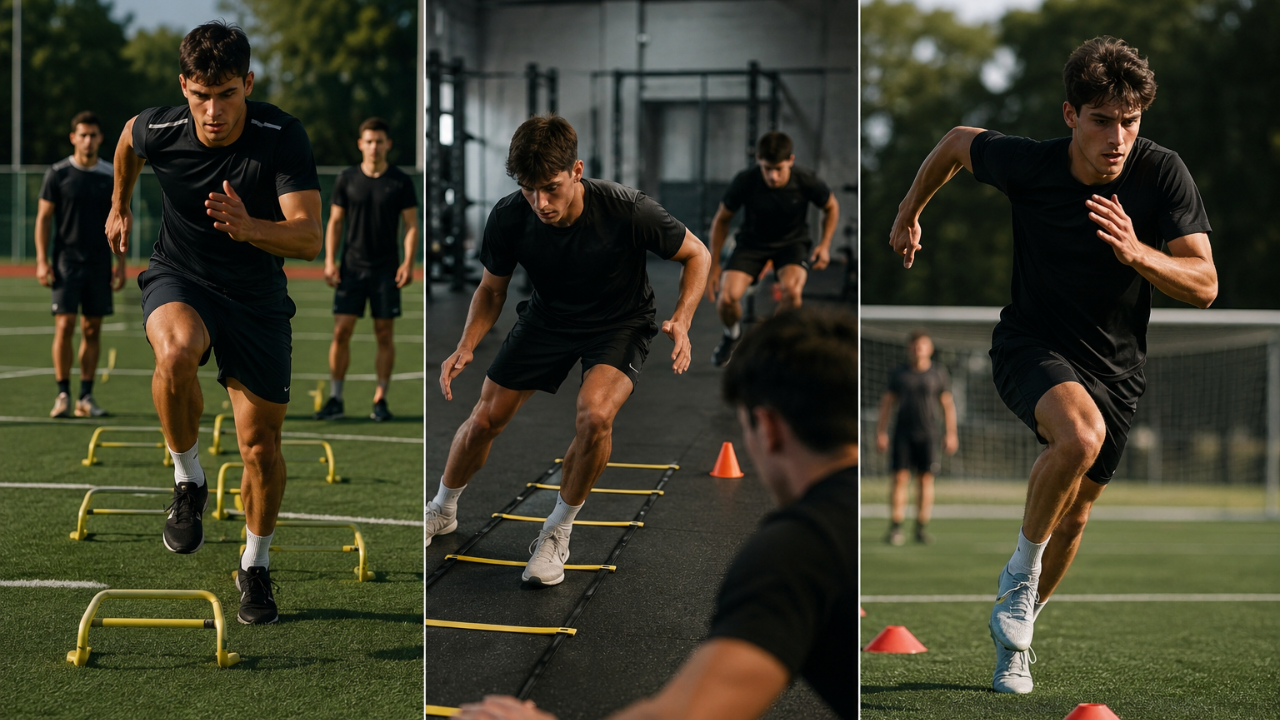
Weekly Training Schedule Example
Monday
Dynamic warm-up
Sprint mechanics
Speed drills
Core work
Wednesday
Dynamic warm-up
Agility drills
Reaction training
Strength exercises
Friday
Dynamic warm-up
Speed development
Competitive drills
Recovery work
This schedule allows sufficient recovery while maximizing performance gains.
Common Mistakes Athletes Make Before the Season
Doing Too Much Too Soon
Athletes often attempt to train at maximum intensity immediately after a period of inactivity.
Gradual progression produces better long-term results.
Ignoring Recovery
More training is not always better.
Recovery is essential for performance improvement.
Skipping Warm-Ups
Cold muscles are less efficient and more susceptible to injury.
A dynamic warm-up should never be skipped.
Focusing Only on Conditioning
Many athletes spend hours running but never work on acceleration, agility, or movement mechanics.
Speed training should be a major component of preseason preparation.
Why Professional Speed and Agility Training Makes a Difference
While athletes can complete basic drills independently, professional coaching helps maximize results.
Experienced coaches can identify movement inefficiencies, correct technique errors, and create individualized training plans based on an athlete’s age, sport, and goals.
Structured speed and agility programs also provide accountability, progression, and sport-specific development that many athletes cannot achieve on their own.
For Michigan athletes preparing for fall sports, working with qualified performance coaches can provide a significant competitive advantage heading into tryouts and the regular season.
Get Ready for Your Best Season Yet
The weeks before school starts are one of the most valuable training periods of the year. Athletes who invest in speed and agility development now often enter the season faster, more confident, and better prepared to compete.
Whether your goal is making the varsity team, earning more playing time, or simply becoming a better athlete, a structured 6-week speed and agility plan can help you achieve measurable improvements before the first whistle blows.
Schedule an Athletic Performance Assessment
Frequently Asked Questions
How many days per week should athletes train speed and agility?
Most athletes benefit from 2-3 dedicated speed and agility sessions per week with adequate recovery between workouts.
At what age should athletes begin speed training?
Athletes can begin age-appropriate speed and movement training as early as 7-8 years old when programs focus on proper mechanics and athletic development.
Can speed and agility training help prevent injuries?
Yes. Improved movement mechanics, balance, coordination, and body control can help reduce the risk of common sports injuries.
Which sports benefit most from speed and agility training?
Virtually every sport benefits, including football, soccer, basketball, volleyball, baseball, softball, lacrosse, hockey, and track and field.
How long does it take to see results?
Most athletes notice improvements in movement efficiency, quickness, and confidence within 4-6 weeks of consistent training.
Schedule an Athletic Performance Assessment
Find out where your athlete stands and receive a customized development plan focused on speed, agility, strength, and overall sports performance.